“I can’t create in silence,” Habib Hajallie shares. “Music helps me reach a flow state. It carries me through when I hit a lull.” He humorously adds that if he listens to music while writing, he tends to type out the lyrics. However, music significantly influences his artistic process, evident in the rhythm and energy of his drawings. With a ballpoint pen, he meticulously crafts his portraits, akin to a conductor leading an orchestra. This practice demands immense patience and concentration, allowing him to immerse himself in the music while focusing on intricate details. “Understanding the pressure of my pen is crucial; mistakes are unavoidable otherwise.”
Music deepens Hajallie’s connection to the historical figures he portrays. For instance, when illustrating West African subjects, he immerses himself in Afro-beats or classical African tunes. “These sounds are vibrant and energizing, helping me capture their essence.” Different musical genres accompany various subjects and scales, such as in the Grime Series, showcased in The Sound of Form exhibition, where he overlays renowned grime artists onto London tube maps —the birthplace of Grime. “While drawing JME, I listened to a lot of his music.”

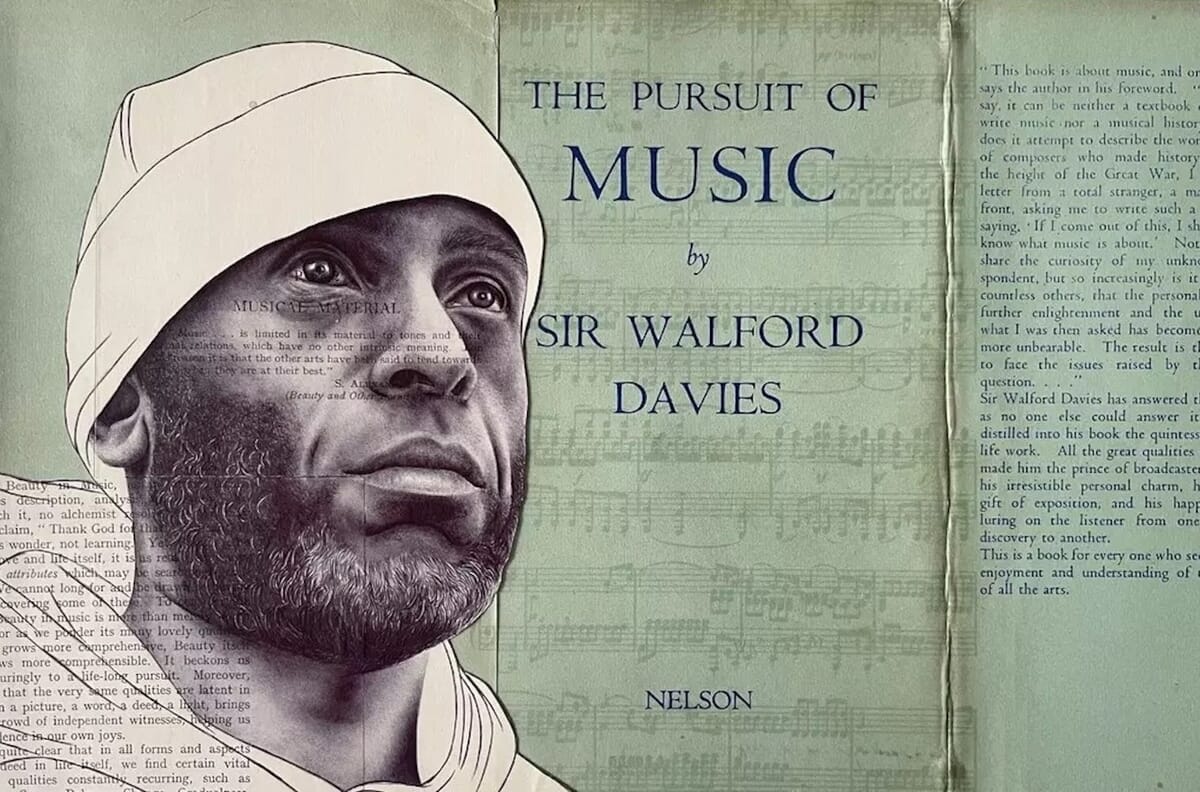
The lifelike quality of Hajallie’s subjects is striking, yet their intricate details are just a part of the story. For him, drawing transcends mere representation; it’s about reviving forgotten histories and amplifying marginalized voices, with his pen serving as a subtle instrument of rebellion. Starting his process with a practical mindset, Hajallie collects antique texts from vintage shops and online marketplaces. “I have many philosophical books that I sift through, highlighting sections that resonate with me.”
From his extensive collection of quotes and prints, he moves to recontextualization and subversion, aiming to challenge ethnocentric perspectives and promote cross-cultural empathy. He superimposes both notable contemporary figures and historical personas—many of whom have been marginalized—onto pages of 18th and 19th-century literature steeped in colonial ideologies.

By contrasting outdated notions of eugenics, race, and misogyny with contemporary themes, Hajallie reclaims narratives of the past. Inspired by artists like Godfrey Donegal, who uses archival materials to challenge stereotypes, and Barbara Walker, known for her found materials addressing racial profiling, Hajallie’s work fosters a dialogue across time. This dialogue reclaims historical narratives and repositions marginalized figures prominently, “reincarnating” them and enhancing discussions on minority representation.

This intersection is further enhanced by Hajallie’s use of crosshatching and techniques reminiscent of the Renaissance, all executed with his simple ballpoint pen. This fusion of domestic tools with classical methods creates a compelling blend of high and low art.
“I began drawing with pens. We had plenty of Barclays and Argos pens when I was young. I’ve always appreciated the immediacy of it; there’s no need to sharpen or dip it in water. What started as convenience has become integral to my practice, holding personal significance.”
In an era increasingly leaning towards technology and a “more-is-more” approach, traditional mediums seem to be fading. However, Hajallie remains committed to his medium, believing there is still much to explore. “I enjoy drawing because it’s an analogue medium. Creating with my hands is special—it becomes a part of me,” he explains.

This sentiment is particularly evident in Hajallie’s “quasi-surrealist” self-portraits, which caricature himself to provoke discussions about his dual heritage—Sierra Leonean and Lebanese. Through these imaginative narratives, he explores the complexities of his identity and broader cultural themes. “I’ve realized my experiences are sufficient to use myself as a subject to express what I want to convey,” he reflects.
Hajallie’s works, rich with historical and personal significance, invite viewers to engage with multi-layered narratives, encouraging them to listen to stories often neglected or erased from various canons. Ultimately, these portraits reflect our biases and serve as a reminder to examine the deeper meanings: What do they truly represent? And what might we be overlooking by not delving deeper?
 | Rise Art Source: https://www.riseart.com/article/2773/organised-artistic-rebellion-with-habib-hajallie Fine art meets contemporary interiors. We're pleased to collaborate with Soho Home to provide original artwork from emerging and celebrated artists. |