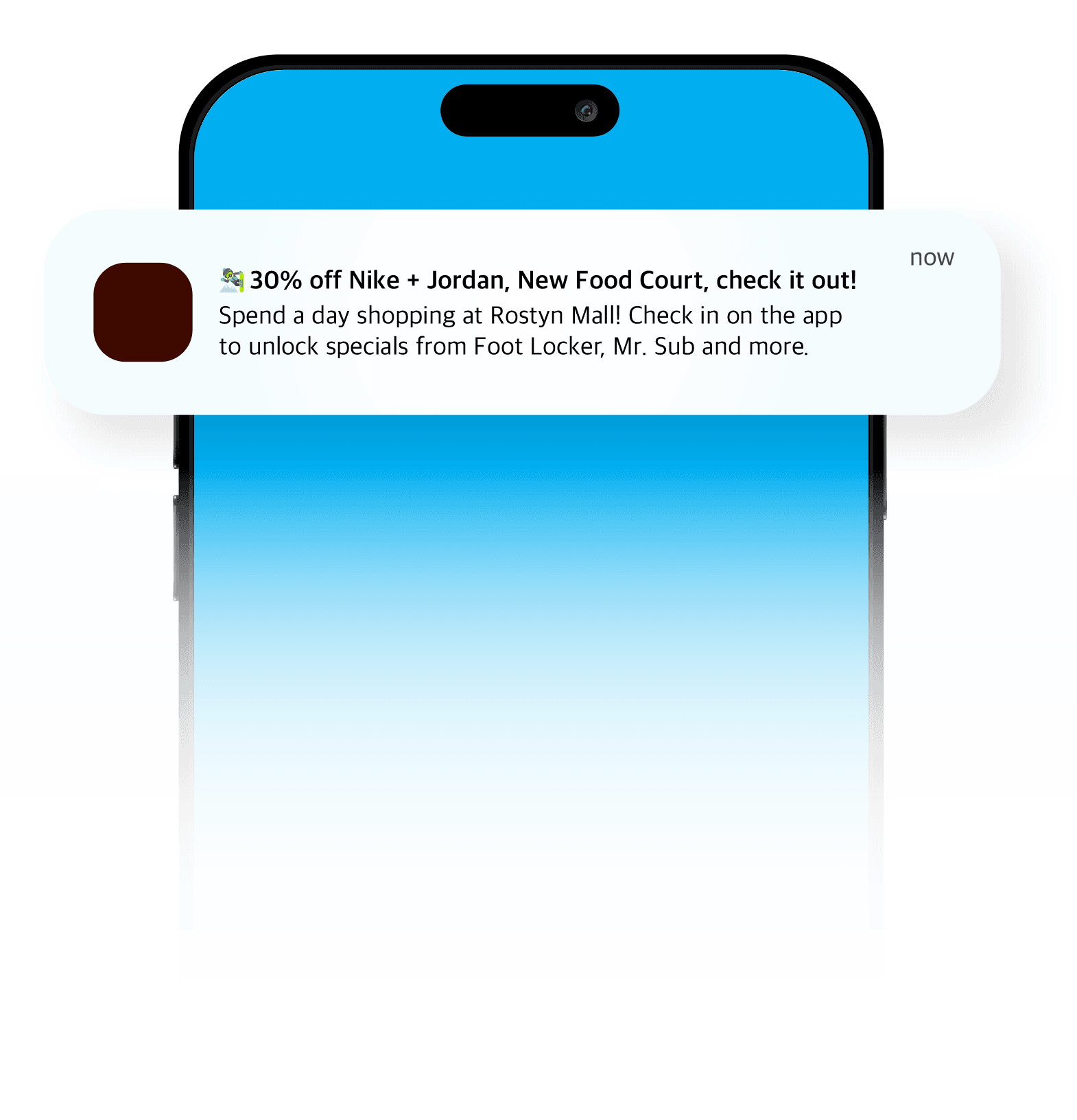
- Renting vs. Owning (The Digital Tax): Currently, you pay Facebook and Google to reach shoppers who are standing in your own food court. This is “Renting” your audience. By deploying an in-store app, you own the communication channel, eliminating the dependency on third-party algorithms and privacy policy changes.
- The Margin Opportunity: Traditional real estate leasing is high-friction and capital intensive. Retail Media is low-friction and scalable, offering operating margins of 85%+. Adding a “Digital Media” revenue stream impacts your Net Operating Income (NOI) significantly more than raising rents by a few dollars.
- Winning the “Tenants of the Future”: Next-generation retailers (Direct-to-Consumer brands like Warby Parker or Allbirds) are obsessed with Customer Acquisition Costs (CAC). They will prioritize leasing in malls that can prove conversion data over malls that simply promise “estimated footfall.”
- The Asset Valuation: An owned data channel doesn’t just generate cash flow; it increases the value of your retail real estate asset.
While you are fighting to squeeze an extra $2.00 per-square-foot from a struggling fashion retailer, giants like Simon Property Group and Westfield (URW) have realized that their physical traffic is a media asset that rivals a TV network.
But here is the problem: You cannot sell what you cannot measure.
If you don’t have first-party data, you aren’t a Media Network. You’re just a building with some digital billboards.
Paying for ads on social media? Then it must feel like you are paying to talk to your own customers.
Every time you want to announce a new store opening or a holiday event, you pay Mark Zuckerberg (Facebook/Instagram) to boost a post. Or maybe, you’re buying ads on YouTube or Google. You could even be exploring more legacy media formats, like television or radio.
The Reality: You are effectively “renting” access to people who are currently standing in your own food court.
The Risk: When Apple killed the IDFA (tracking cookie) in iOS 14, your ad effectiveness dropped 40%. In 2026, privacy laws will kill third-party data entirely.
The Consequence: If you rely on Social Media to drive traffic, you are building your house on rented land.
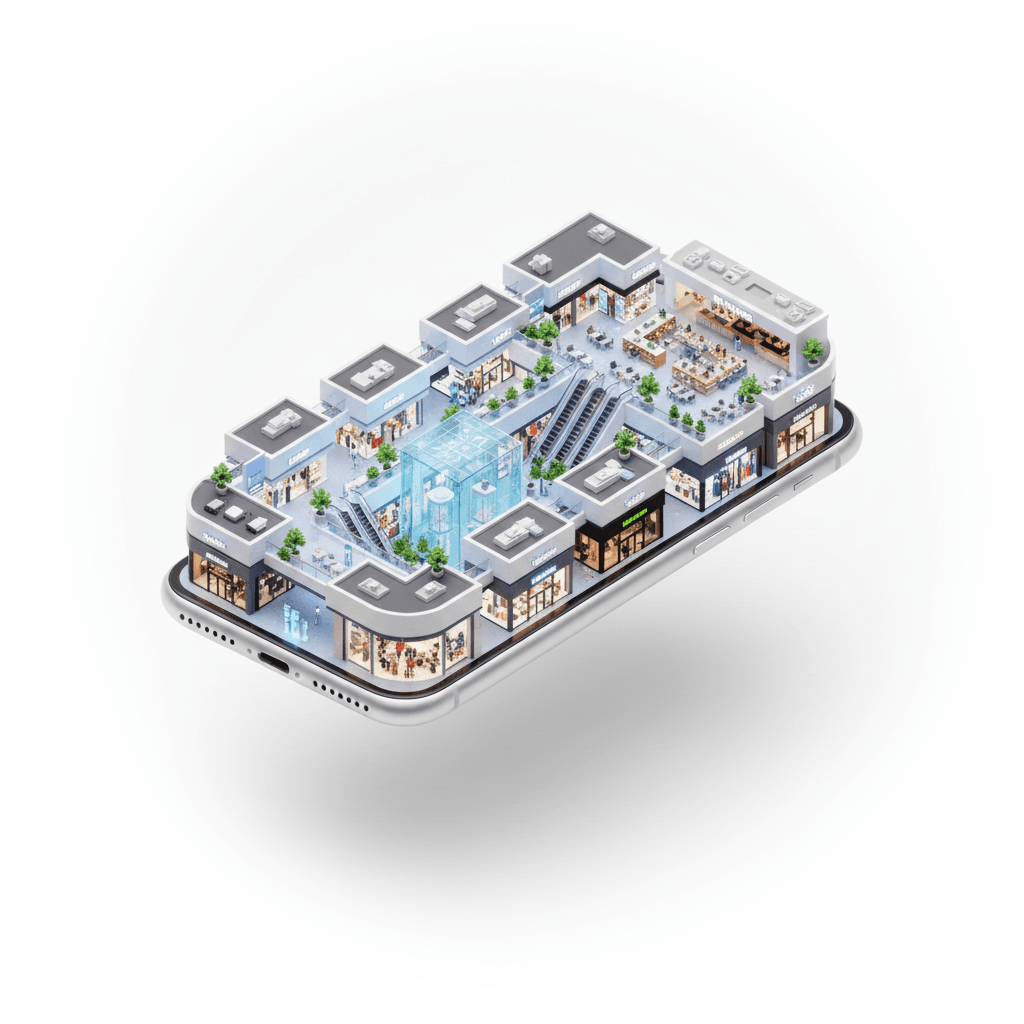
So how do we do this ourselves? To become a Retail Media Network, you need an “Owned Channel.”
This is where an In-Store App for your shopping malls shifts from a “Utility” to a “Platform.”
The “Westfield Rise” Model: Westfield didn’t put up screens; they built a system that segments shoppers based on shopping behavior, as well as demographics.
Old Way: “Show this ad to women aged 25-40.”
New Way: “Show this ad to shoppers who visited Sephora in the last 14 days but haven’t visited MAC Cosmetics.”
Your Strategy: Capture first-party data via your mall’s app. Syndicate will build the infrastructure.
Let’s compare: In-app vs. social media advertising
The Identity Layer: A verified user login (not an anonymous cookie).
The Attribution Layer: We prove that User A saw the ad in the app and physically walked into Store B (The “Closed Loop”).
The Inventory Layer: You sell this “Attribution” to your tenants at a premium.
The “Future State”: working with DTC eCommerce brands, next in line to lease at your shopping mall
The tenants of the future are brands delivering immense success online – think eCommerce DTC brands like Warby Parker and Allbirds. And if you want them at your mall, you must understand that they are addicted to data, and they will prioritize leasing in malls that can provide Customer Acquisition Costs (CAC) data over malls that just provide “foot traffic estimates”.
Here’s a scenario for you:
- Mall A (The Landlord): “We have 10 million visitors.”
- Mall B (The Media Network): “We can deliver your ad to 50,000 ‘High-Intent’ shoppers and prove that 12% of them walked into your store”.
Which mall gets the lease?
We work with REITs across Canada and the USA, but the Syndicate product is not for everybody.
If you have a fully filled list of tenants waiting for vacancy in your mall, and face no vacancy risk, then we are not for you. But if you rely on ads from Instagram, YouTube, and the radio to drive foot traffic to your mall, then you are renting your customers. It’s time to build an asset.