The architecture and construction sector is facing heightened sustainability regulations, with Biodiversity Net Gain (BNG) standards now required for planning application approvals. There is also increasing pressure from clients and stakeholders for transparency regarding carbon emissions associated with building projects and organizational practices. To maintain a competitive edge, architects, developers, and planners should incorporate nature-positive approaches and low-carbon designs into their work.
Biodiversity Net Gain: Navigating Compliance
BNG is a compulsory requirement in England, mandating a 10% net increase in biodiversity after development. While BNG assessments support biodiversity conservation in the UK, many professionals face tight deadlines and the necessity for ecological approval to obtain planning permission.
Strategies to Achieve BNG Compliance:
• Baseline Habitat Survey: Evaluating habitat types to set a baseline for biodiversity measurement.
• Biodiversity Hierarchy Analysis: Utilizing the baseline survey to identify and protect hedgerows, habitats, and watercourses for conservation and enhancement.
• Implementation: Creating tailored BNG plans that encompass habitat restoration and sustainable land management.
• Ecologist Approval: Gaining endorsement from a qualified ecologist to secure local council sign-off and planning permission.
Case Study: Leicester College Abbey Park Campus
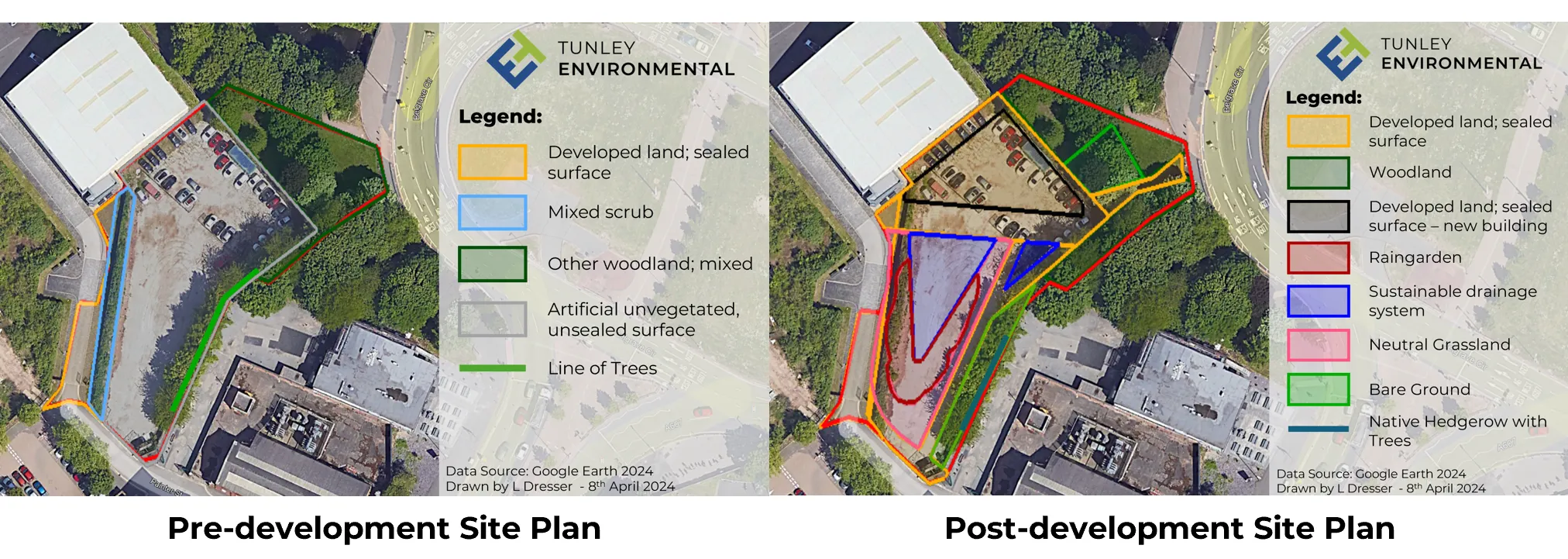
Moss Architecture Interiors Ltd needed to demonstrate a 10% biodiversity enhancement for a new training facility’s planning application. Tunley Environmental executed an independent BNG assessment for the small site, integrating a rain garden, native tree planting, and a neutral grassland mix into the design.
The project achieved a 21.11% increase in biodiversity units for area habitats and a 16.85% rise for hedgerows, significantly surpassing the required 10% and ensuring planning approval.
Through expert assessments, architects can simplify compliance and embed sustainability from the outset.
Carbon Footprint Assessments: Minimizing Impact
In addition to biodiversity, carbon footprint assessments are vital for architects aiming to evaluate and decrease both embodied and operational carbon in their projects and organizations.
Implementing Carbon Reduction in Projects and Organizations:
• Baseline Assessment: Establishing a foundation for emissions reduction.
• Roadmap to Net Zero: Formulating strategies to lower emissions throughout design and construction phases.
• PAS 2080 Compliance: Evaluating project delivery against PAS 2080 standards, closely tracking carbon emissions throughout the project, and effectively managing the value chain.
• The RIBA Plan of Work: Adhering to the eight RIBA stages for building projects and conducting a whole life cycle assessment (WLCA) at each stage to enhance potential for reducing environmental impact.
Case Study: PORR’s High-Speed Two Project
PORR, a prominent European construction firm, collaborated with Tunley Environmental to secure PAS 2080 accreditation for a High-Speed Two (HS2) infrastructure project. They required a carbon model to identify embedded carbon and reduction strategies.
With Tunley’s expert analysis, PORR successfully cut emissions by 177 t CO 2 per linear km of single track.
Andrea Dimboiu, project manager for PORR, praised Tunley’s proactive approach: “Tunley were very proactive and willing to go the extra mile.”
This demonstrates how carbon-conscious strategies can be integrated into projects for compliance and significant sustainability impact.
Future-Proofing Projects with Sustainability Expertise
As regulations surrounding BNG and carbon reduction evolve, architects can proactively adjust their practices. Collaborating with experts like Tunley Environmental ensures compliance while integrating sustainability effectively.
Architects confronting BNG and carbon challenges can leverage expert assessments that enhance regulatory compliance and promote long-term project sustainability.

 | Architect’s Journal Up to the minute architecture news, including building reviews, insight on running a successful practice and the latest architectural competitions. |