Hollywood’s disinterest in paranoid thrillers like The Parallax View and Three Days of the Condor raises questions about cultural and market shifts. These films thrived during an era marked by political turmoil, including the Vietnam War and high-profile assassinations, which deeply affected public sentiment.
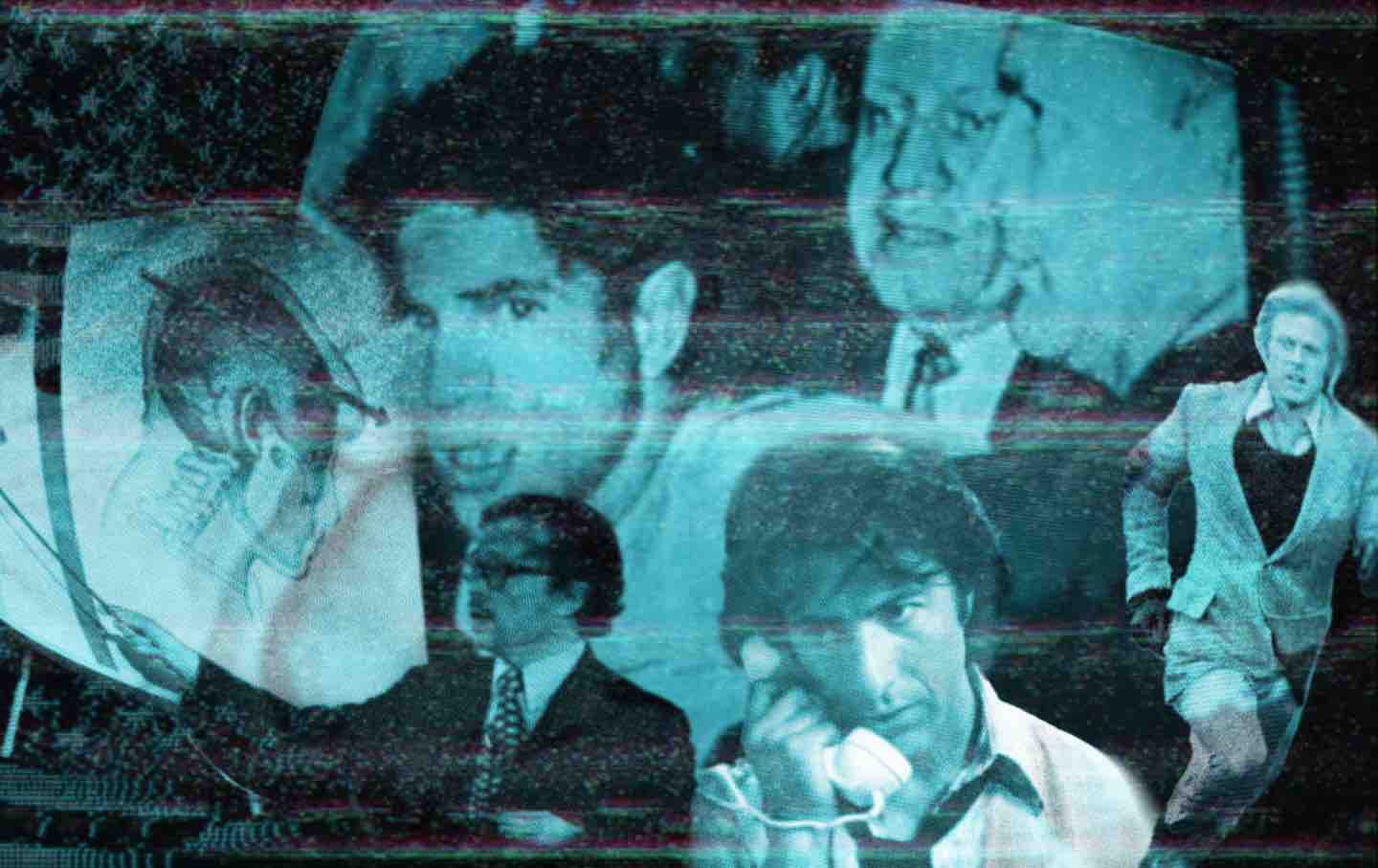
Dr. Michael Baden testifying before the House Assassination Committee in 1978, alongside images of pivotal moments in political history.
Alan J. Pakula’s The Parallax View opens with a dramatic assassination scene that sets the tone for a film exploring deeper systemic issues rather than just individual crimes. The film reflects the pervasive anxiety of the 1970s, a time when the public began to question the integrity of their institutions. The cinematography, characterized by dark, shadowy visuals, mirrors the confusion and uncertainty felt by audiences.
This film is part of Pakula’s “paranoia trilogy,” which captures a transition from a small-scale conspiracy narrative to larger national issues, ultimately culminating in a more optimistic portrayal of journalistic integrity in All the President’s Men.
Other filmmakers like Francis Ford Coppola and Sydney Pollack also explored similar themes, embedding societal anxieties into their narratives. For instance, in Three Days of the Condor, the protagonist grapples with trust and betrayal, culminating in an ambiguous ending that leaves the audience questioning the reliability of information.
As the 1980s approached, the landscape of Hollywood transformed dramatically. The rise of Reaganism heralded a shift towards more optimistic narratives, aligning with a public yearning for reassurance and a return to traditional values. This change was marked by films like Conspiracy Theory (1997), where conspiracy elements were simplified for mass appeal, leading to less nuanced storytelling.
Films from the late 1990s, such as The Firm and Enemy of the State, followed similar patterns, favoring clear resolutions over the complex moral ambiguities of earlier works. Even Pakula’s final film, The Pelican Brief, adhered to this trend, offering a conventional thriller format that resolved its conspiracy plot neatly.
The evolution of conspiracy narratives reflects broader cultural trends, as Hollywood increasingly sought to produce films that guaranteed box office success. This focus on mass appeal has persisted, with studios prioritizing franchise films over innovative storytelling.
As conspiracy theories have proliferated in the digital age, platforms like YouTube have facilitated their spread, transforming fringe ideas into mainstream discussions. Documentaries like Loose Change exemplified this shift, blending archival footage with personal narratives, while social media has allowed communities to form around these theories.
Today, conspiracy theories serve as both a means of personal expression and a reflection of societal discontent. The rise of movements like QAnon illustrates how conspiracy thinking has permeated various segments of society, often becoming a tool for cultural signaling rather than genuine inquiry.
Despite the enduring presence of conspiracy themes in popular culture, Hollywood has been slow to adapt to the evolving landscape of public skepticism and disillusionment. The dominance of franchise filmmaking has overshadowed the potential for more complex narratives that engage with contemporary anxieties.
In conclusion, the trajectory of conspiracy cinema from the 1970s to today highlights a significant shift in storytelling, from nuanced explorations of societal issues to simplified narratives catering to mass audiences. As we navigate a world rife with uncertainty, the challenge remains for filmmakers to capture the complexities of our reality without sacrificing depth for profitability.
 | The Nation Source: https://www.thenation.com/article/culture/conspiracy-movies-thrillers-essay/ The Nation is a progressive American monthly magazine that covers political and cultural news, opinion, and analysis. |