- Architects: FibR GmbH, Karlsruhe Institute of Technology (KIT)
- Area: 51 m²
- Year: 2024
Photographs: DDF_KIT
Design Team: Karlsruhe Institute of Technology (KIT), FibR GmbH
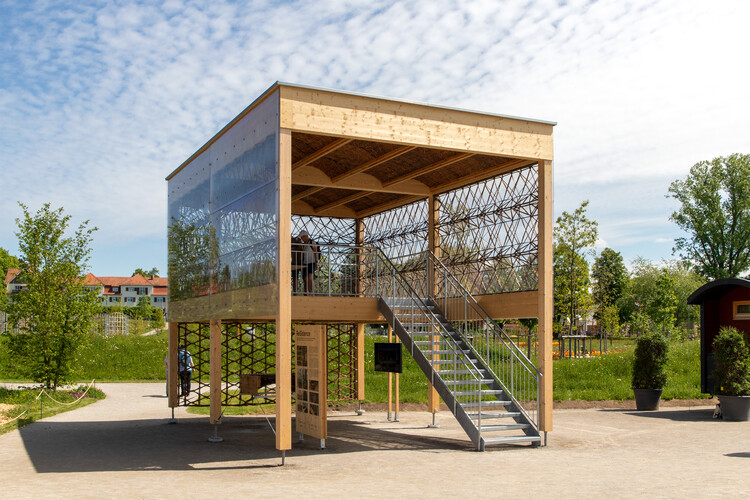
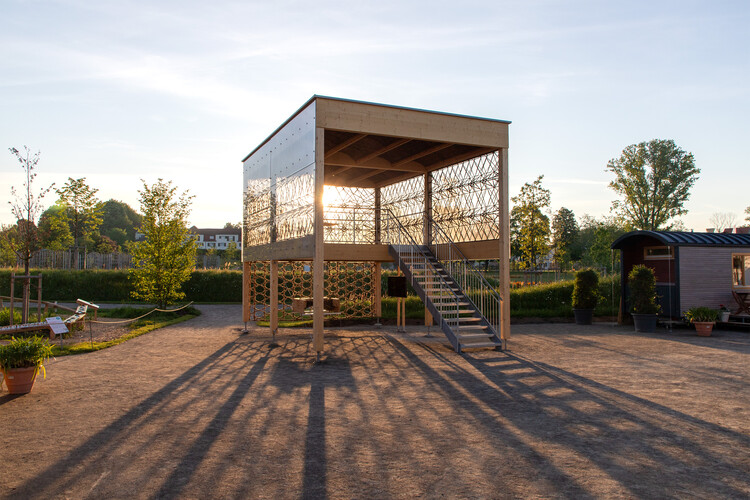
The architectural design emphasizes a modern approach to multi-storey buildings by integrating natural materials with low-impact digital fabrication methods. The use of willow, earth, flax, and wood illustrates how the challenges of natural materials can be turned into opportunities, enabling architects to influence and design change. Drawing inspiration from traditional half-timbered construction techniques, this project effectively combines these materials into low-emission, structurally sound building components.
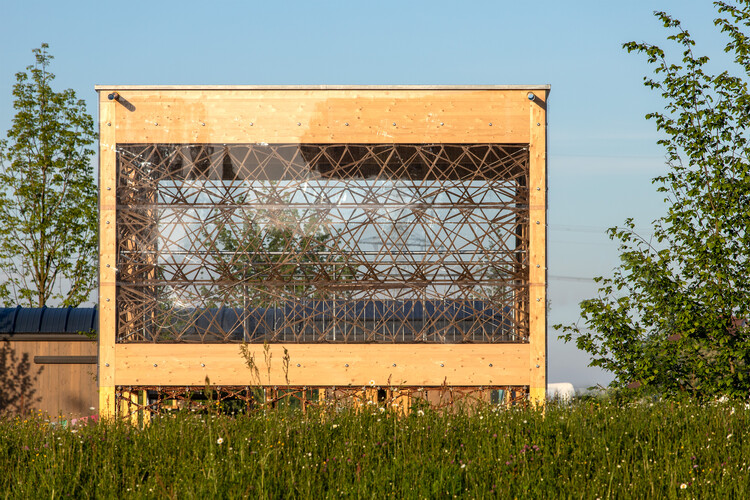
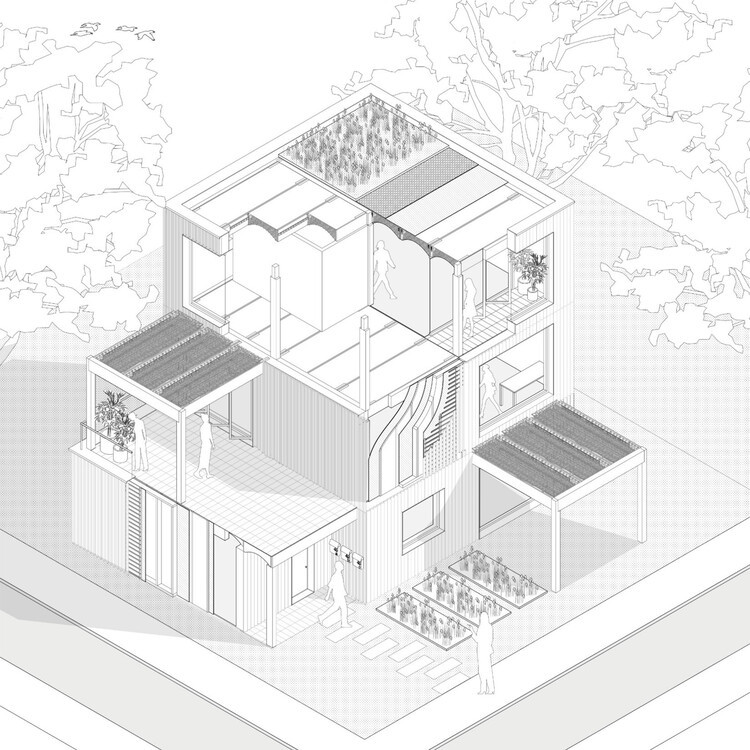
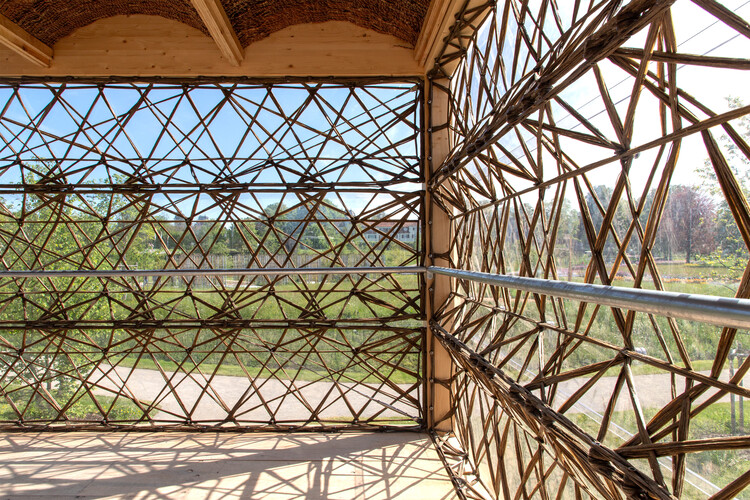
The architectural concept is based on a modular system where the hybrid earth-willow-timber elements measuring 3.6 x 1.2 meters fit into a timber framework. The ceiling components not only bolster the structure but also contribute a unique architectural identity, showcasing a harmonious blend of form and material. The façade features flax fiber composite elements that bridge the gap between the primary load-bearing structure and the point-supported façade. This modular approach allows each part to be removed without waste, fostering a truly sustainable material lifecycle. After deconstruction, the materials—willow, earth, flax, and wood—can be reintegrated into local material cycles or repurposed in other projects.
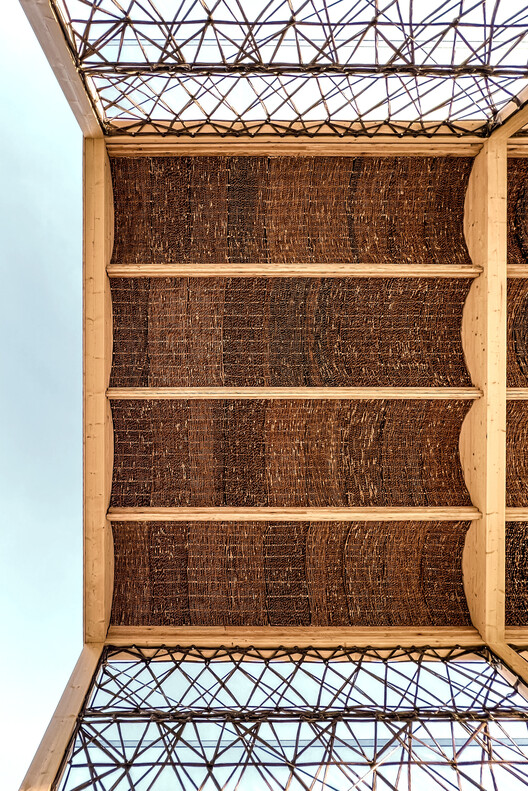
Willow serves as tensile reinforcement, arranged in spatial ‘rebar’ structures, while earth provides compression, creating stable modules that mimic the effectiveness of steel-reinforced concrete but with a significantly lower environmental footprint. Flax fibers and timber enhance this hybrid system, encouraging closed material cycles and supporting a local circular bio-economy. The selection of materials and the innovative fabrication processes serve as design catalysts, inspiring new architectural approaches that unite sustainability with creative exploration. This methodology enriches the building’s aesthetics, highlighting the textural features of natural materials and fostering a conversation between form and function. The materials chosen for ReSidence—earth, willow, flax, and wood—were deliberately selected for their sustainability and potential to promote closed material cycles, contributing to a local circular bio-economy. The focus on local resources, such as willow cultivated on rewetted moorlands, reflects an ecological strategy aimed at minimizing CO₂ emissions while sustaining agricultural productivity.
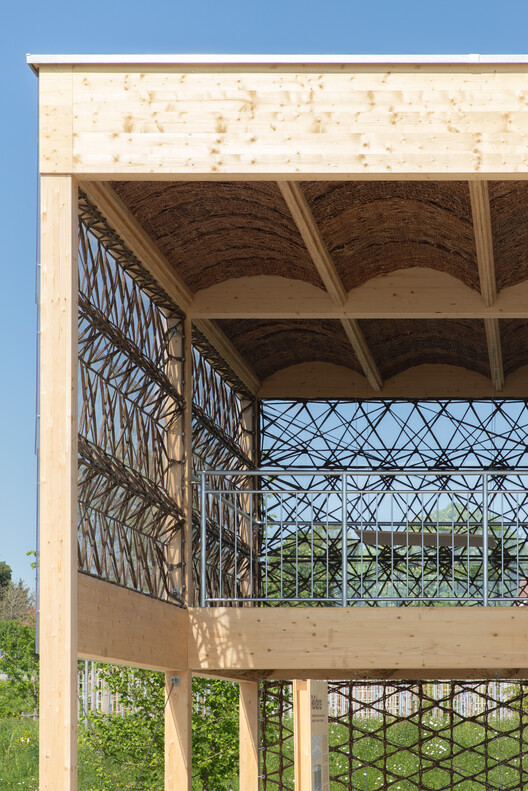
Research into digital construction technologies underpinned the project, promoting innovation from concept through to fabrication. Digital tools were essential for design exploration, structural simulations, and the enhancement of construction methods. This approach emphasized the necessity of collaborative research across digital and sustainable construction, structural design, component testing, and life cycle assessment. By integrating these disciplines, the project examined how materials interact and their structural potential, underscoring the commitment to advancing sustainable building practices.
 | Arch Daily Broadcasting Architecture Worldwide: Architecture news, competitions and projects updated every hour for the architecture professional |